What is the Card Note Method?
Miremo's card notes are very easy to use, but to better help you think, I think you also need to ask yourself a few questions:
- What is the purpose of taking notes?
- What form of notes can help with thinking?
In Miremo's user manual, I hope not only to tell you how to use this tool, but also to help you think better.
So in the following Miremo guides, I will combine Miremo's features to briefly describe some of my methodologies and some experiences and lessons I've learned on my note-taking journey.
Why Do I Recommend Maintaining a Writing Habit?
Since elementary school education, we've been required by teachers to write constantly. I still remember scratching my head every Sunday night for the weekly journal due the next day. At that time, I only knew that writing had benefits, that it could help me use more beautiful sentences to write essays and then get better grades in Chinese exams, but I never thought about what the meaning of writing really was.
It wasn't until after I started working, when I needed to read and learn extensively for work, that I discovered that writing is almost the only way to organize thoughts.
After getting used to writing, I gradually discovered that the sole purpose of writing is actually thinking.
Card Note Writing Method
"It is impossible to think systematically without writing" —— Niklas Luhmann, 1992
The Card Note Writing Method (Zettelkasten Method) is a methodology proposed by German sociologist Niklas Luhmann between 1954-1955.
If we summarize its core idea in one sentence, it is: Record sporadically, connect thoughts.
And I believe the core is the interweaving of points and lines:
- Points: Record any idea at any time
- Lines: Use links to connect scattered ideas
Points and lines interweave to become the fabric of a thinking network.
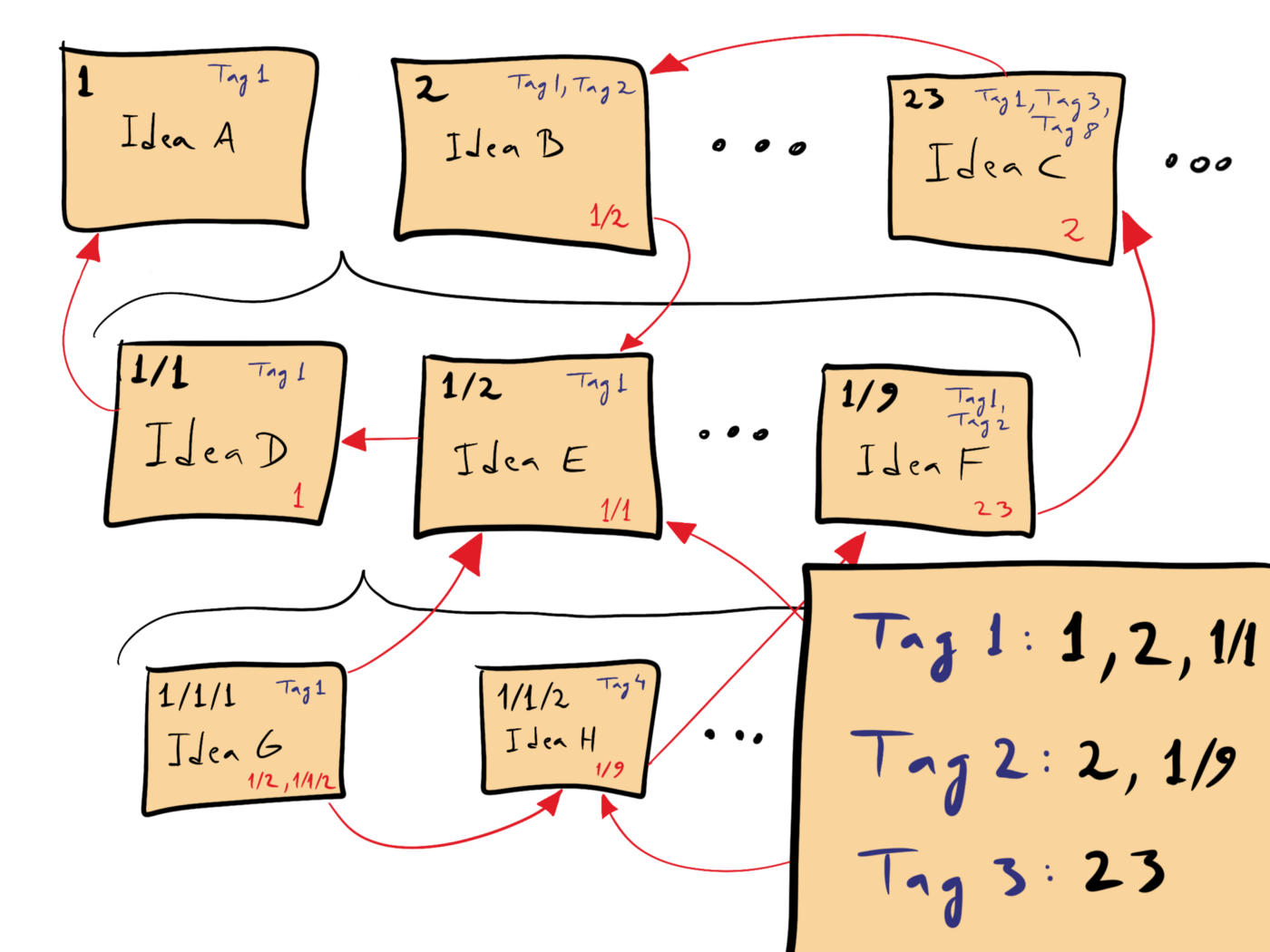
The above is the essence of the card note writing method.
Levels of Recording
Why are Miremo's card notes "outline-style"? The reason is straightforward: because our thinking itself is hierarchical.
If you've ever read "The Pyramid Principle", you should understand that hierarchical structure is the natural way the human brain processes information.
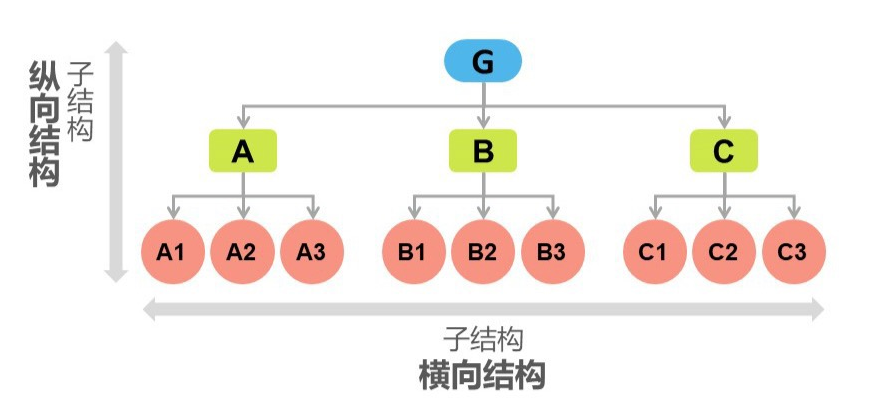
The "outline-style" structure of card notes is designed to match this thinking mode.
Using this approach, Miremo encourages you to break down knowledge into smaller pieces and organize them through hierarchical relationships.
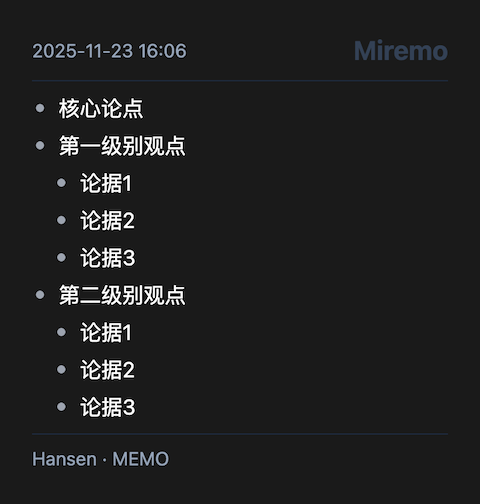
Following the principle of less is more, the levels of the outline should be as few as possible. Too many levels will affect your recording efficiency and are unnecessary.
In short, the hierarchy of the outline should serve your thinking, not become a burden. Everything should center on you.